Where you sleep in the Masai Mara ecosystem shapes what your game drives can include, how many other vehicles you share sightings with, and which activities are even available to you. A national reserve camp gives you the broadest access to Kenya’s most iconic wildlife destination. A conservancy camp gives you a more exclusive version of the same ecosystem, with a different set of activities and a fundamentally different atmosphere.
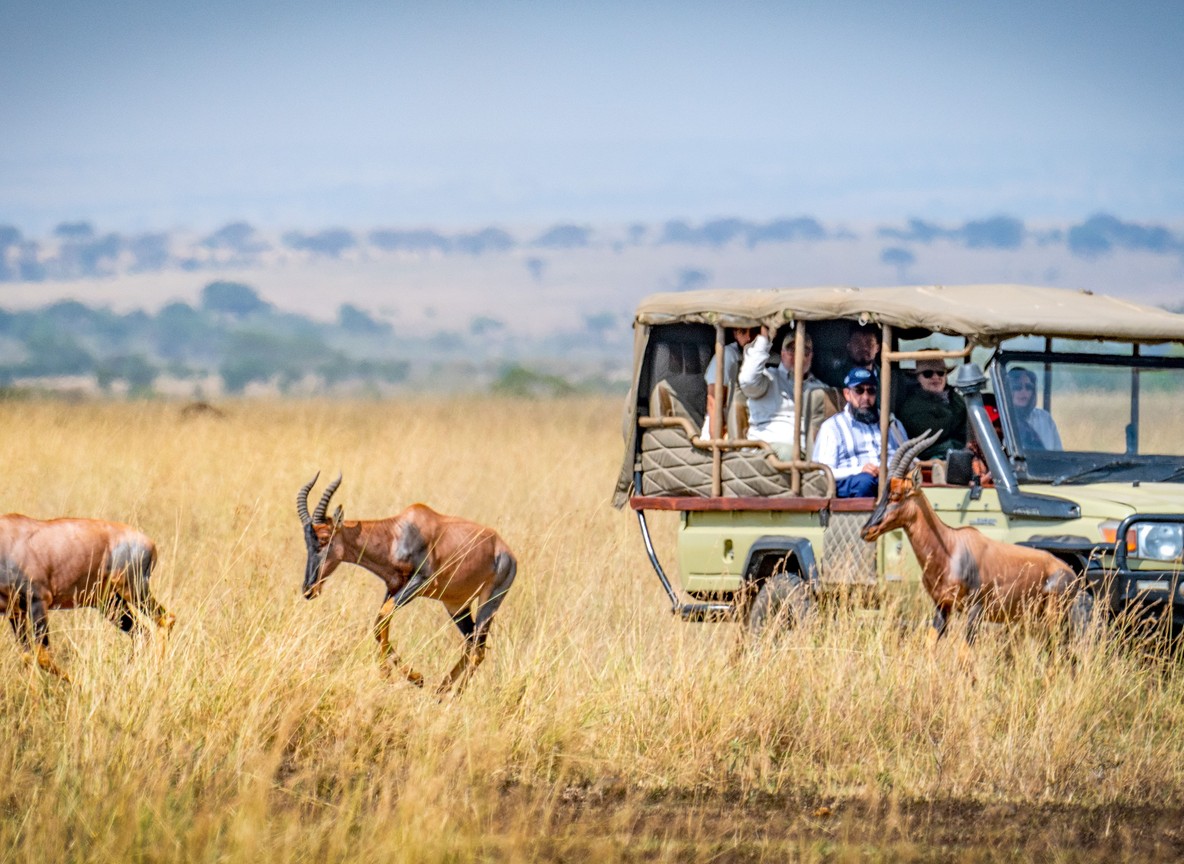
The wildlife itself moves freely between both areas. The difference is in the experience around the animal.
The Masai Mara National Reserve: What It Is
The Masai Mara National Reserve is administered by Narok County Council. It covers 1,510 km2 of open savannah and is Kenya’s most visited wildlife destination.
Key characteristics of the national reserve:
- Camps inside or directly adjacent to the reserve boundary share the road network with all safari vehicles
- Game drives must stay on designated tracks: no off-road driving
- Gate hours typically run from 6am to 6pm or 7pm
- Night game drives are not permitted inside the reserve
- Accommodation ranges from budget campsites through to luxury lodges
- Park fees are approximately $80 per day per non-resident adult
- More competition for space at popular sightings during peak season
The reserve provides the most affordable and accessible entry point to the Masai Mara experience, with the widest range of camp options across price tiers.
Masai Mara Conservancies: What They Are
The conservancies are privately owned or community-managed lands surrounding the national reserve. Major conservancies include Olare Motorogi, Naboisho, Mara North, Ol Kinyei, Lemek, Mara Triangle, and Siana, collectively covering an area larger than the reserve itself.
Key characteristics of conservancy camps:
- Each camp operates within an exclusive or semi-exclusive game drive zone: significantly fewer vehicles per sighting
- Off-road driving is permitted in most conservancies
- Night game drives are available
- Walking safaris are available with an armed ranger
- Daily conservancy fees are charged in addition to any national reserve entry fees
- Accommodation runs predominantly mid-range to ultra-luxury: budget options are scarce
- Conservation fees directly support community land lease payments and wildlife management programs
- Lower overall bed density: fewer total guests in the area
Activity Comparison: What Each Camp Type Allows
| Activity | National Reserve | Conservancy |
|---|---|---|
| Game drives | Yes (on-road only) | Yes (off-road permitted) |
| Night game drives | No | Yes |
| Walking safaris | No (in main reserve) | Yes |
| Bush breakfast stops | Yes | Yes |
| Cultural village visits | Nearby, separately arranged | Often integrated with camp programming |
| Vehicle density at sightings | High in peak season | Low (exclusive zones) |
| Game drive timing flexibility | Fixed gate hours | More flexible |
The conservancy unlocks activities that are simply not available inside the national reserve. For travelers for whom night drives and walking safaris are priorities, the conservancy camp is the only option.
Wildlife Access: Both Areas, Same Animals
The Masai Mara ecosystem is one contiguous wildlife territory. Animals move freely between the national reserve and the surrounding conservancies. Lion, cheetah, leopard, elephant, buffalo, and the Great Migration herds are present in both areas.
The difference is not what you see but how you see it.
In the national reserve, a prominent sighting: a cheetah with cubs, an active Mara River crossing: can pull 20 to 40 vehicles simultaneously during peak season. The wildlife is real; the solitude is not.
In a conservancy with its exclusive zones and limited permitted camps, the same category of sighting may have two or three vehicles, or your vehicle alone. Off-road capability allows positioning at the optimal angle rather than staying on the track at whatever angle the track happens to offer.
For wildlife photographers in particular, the difference in vehicle density and off-road access is significant enough to be a primary booking criterion.
Cost Comparison
National Reserve: Park fees are approximately $80 per day per non-resident adult. Accommodation spans from budget campsites ($50 to $100 per person per night) through mid-range tented camps ($150 to $350 per person per night) to full luxury lodges.
Conservancies: Conservancy fees add to any national reserve access costs. Typical conservancy fees run $80 to $120 per person per day depending on the specific conservancy. Accommodation in conservancies is predominantly mid-range to ultra-luxury, ranging from approximately $300 to $1,500+ per person per night all-inclusive at top-tier properties.
The cost gap is real and significant. However, conservancy all-inclusive rates typically cover all game drives, walks, night drives, and activities, making the total value comparison more nuanced than a simple nightly rate comparison suggests.
A traveler comparing $200 per night at a reserve camp (drives included) with $600 per night at a conservancy camp (all activities included) is comparing different products. The conservancy delivers exclusive drives, night drives, walking safaris, and off-road positioning. The reserve delivers classic on-road safari access with more vehicle company.
Exclusivity and Atmosphere
Conservancy camps are among the most genuinely exclusive safari experiences available. The combination of strict bed caps, exclusive game drive zones, off-road capability, and night activity access creates a fundamentally different and more intimate relationship with the Masai Mara ecosystem than the reserve provides during peak season.
Reserve camps offer a broader social atmosphere. During peak season, the Talek River and Sekenani Gate areas are active and busy, with multiple operators sharing roads and sightings. For travelers who enjoy the energy of a popular destination and do not need exclusivity, this works perfectly well.
Which Should You Choose
Choose a conservancy camp if:
- Exclusive, intimate game drives with few or no other vehicles are a priority
- Night game drives and walking safaris are on your list
- Off-road vehicle positioning matters for photography
- You are on a honeymoon, anniversary, or special occasion trip where privacy and luxury are part of the brief
- Budget is not the primary constraint and you are optimizing for experience quality
Choose a national reserve camp if:
- Budget is a significant factor and accessible pricing across multiple tiers matters
- You want the widest possible range of camp options
- You are on a group tour with pre-arranged accommodation
- The scale of the reserve and the classic open-savannah landscape are your primary draw
- You are a first-time safari traveler who wants the iconic Masai Mara experience without the complexity of conservancy planning
Many itineraries combine both: one or two nights in a conservancy for the exclusive experience and activity access, with remaining nights in or near the reserve for the classic landscape and more competitive pricing.
Explorer Notes
Not all conservancies are identical. Mara North and Naboisho operate in different parts of the ecosystem with different wildlife zone access. Ol Kinyei and Olare Motorogi have different camp density and zone exclusivity arrangements. Before booking a conservancy camp, it is worth asking specifically what zone exclusivity applies, how many other camps have access to the same area, and whether the off-road access is truly unrestricted or has constraints.
Also confirm what the quoted rate includes. Some conservancy all-inclusive rates cover all game drives and activities with no additional charges. Others add per-activity fees for night drives or walks. The difference matters for total budget planning.
What to Read Next
For the broader question of how conservancies differ from national reserves in terms of revenue model and conservation impact, the community conservancy vs national reserve safari guide is the most useful context. For a breakdown of how conservation-focused operators differ from standard operators, the conservation safari operator vs standard guide covers the operator-level equivalent of this accommodation question.
For current camp comparisons across the Masai Mara ecosystem including conservancy and reserve options, trunktrailssafaris.com maintains accommodation guides with on-ground notes.
Have questions about this itinerary or destination? Get answers from a safari specialist before you commit.
Inquire More